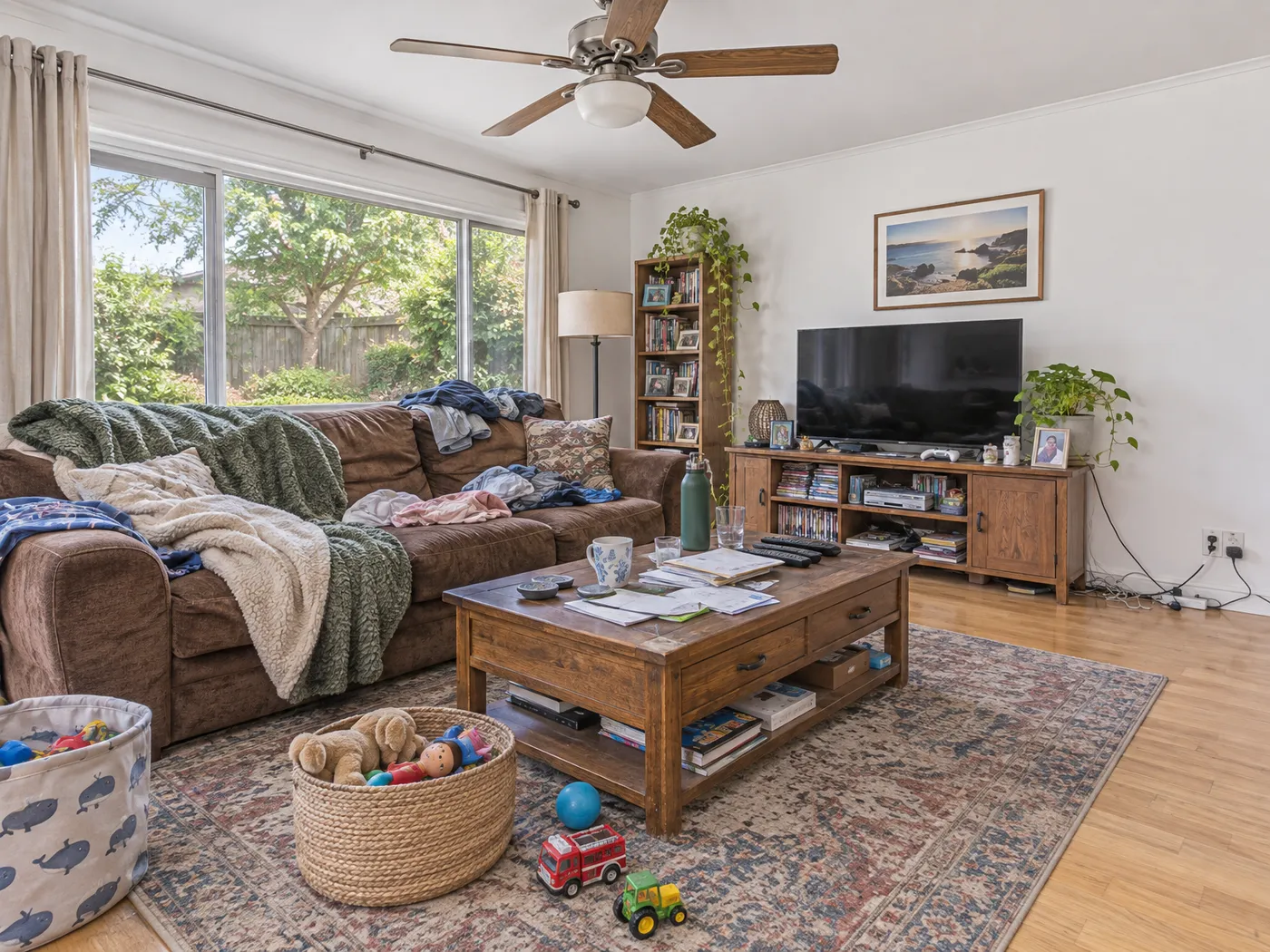

Is virtual staging allowed?
Yes. Neither MLS rules nor California law ban virtual staging. The rules are about honesty: buyers must be told that a photo was altered, and the alteration must not misrepresent the property itself.
California AB 723
AB 723 added Section 10140.8 to the California Business and Professions Code, effective January 1, 2026. When a listing photo is digitally altered in a way that materially changes how the property looks, which includes virtual staging, the advertisement must disclose the alteration, and the original, unaltered photo must be reasonably available to consumers. For online listings, MLSs such as CRMLS and San Diego MLS publish guidance on where to place the original, often right before or after the staged photo.
What most MLSs ask for
Rules differ by MLS, so check your MLS’s photo policy before you publish.
- A clear label on, or next to, each staged photo, such as "Virtually staged".
- The original photo available in the listing or on request.
- No changes to permanent features: walls, windows, views, floors, fixtures.
- No hiding defects, damage or anything a buyer would want to know.
How Virtual Staging HQ helps
- The "Virtually staged" label is on by default for every download.
- Download the original and staged photo side by side in one image.
- Staging never changes walls, windows, floors, built-ins or the camera angle.
Checklist before you publish
- Label every staged photo.
- Keep the original photo next to it, or easy to find.
- Compare each staged photo with the original: only furniture and decor should differ.
- Read your MLS photo policy and follow its exact wording if it gives one.